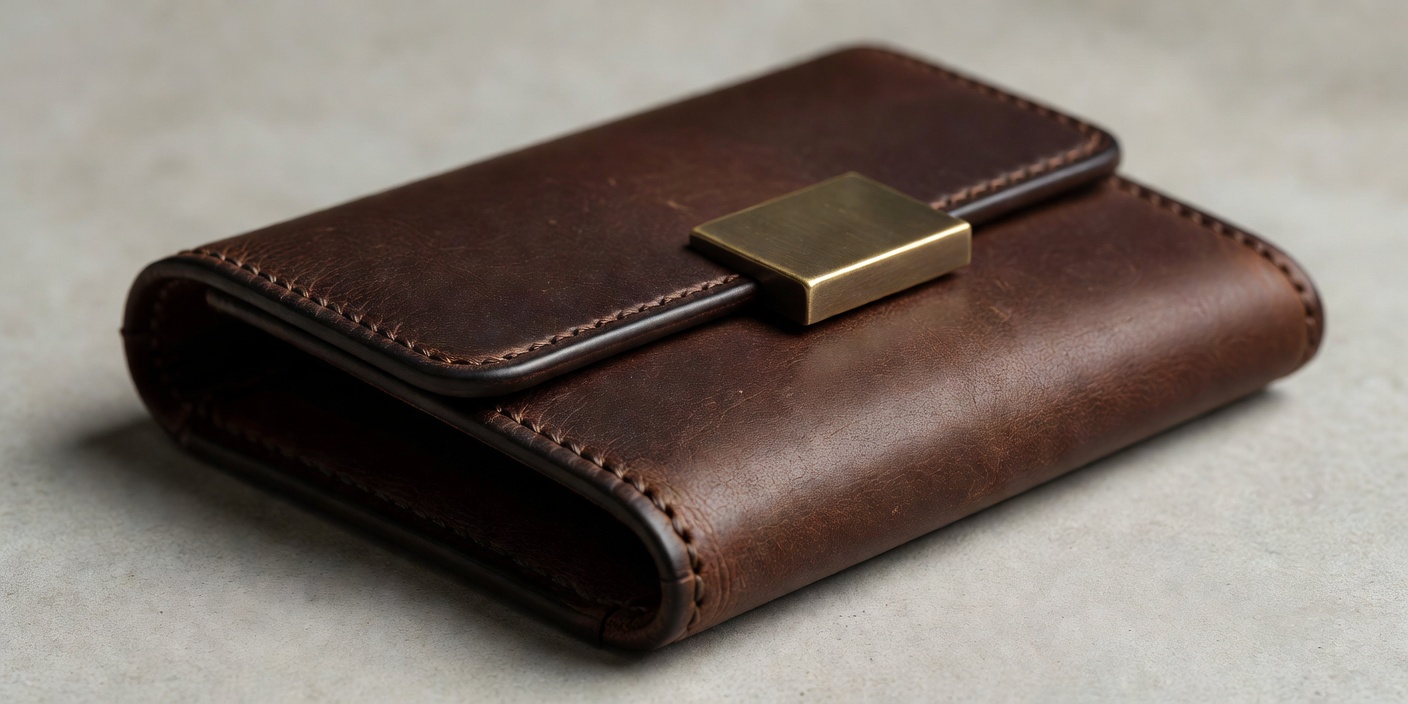
Start with a real use case
Before comparing finishes, describe the job the accessory must do. A wallet may need to hold a few cards and folded notes without bulking out a pocket. A belt may need an adjustable fit and a buckle that sits comfortably. A scarf may be an extra layer, a color accent, or both. Naming the use makes it easier to disregard features that look appealing but add little to your routine.
Think through a normal week rather than an idealized occasion. If you carry a small bag, check the dimensions of a pouch or case against what already fits. If you use an item outdoors, consider exposure to rain, sunlight and friction. A product can be beautifully made and still be the wrong purchase when its scale, closure or maintenance needs do not match your habits.
Read materials with care
Material names alone rarely tell the full story. Ask what a description means in context: which parts are leather, metal, fabric or synthetic; whether a coating is applied; and what the maker recommends for cleaning. For leather goods, different finishes respond differently to water, oils and rubbing. For plated hardware, the care instructions and terms matter more than a vague promise of a lasting shine. Textile accessories benefit from clear fiber content and washing guidance.
When you can inspect an item in person, run your fingers gently over the surface and check the seams, lining and contact points. Look for consistent stitching, edges that do not feel rough, hardware that is aligned, and closures that operate without catching. Those observations are not a guarantee of long-term performance, but they are more informative than a photograph alone.
Balance appearance with mechanics
Hardware is both a visual feature and a moving part. Try a clasp several times. Notice whether it is easy to open one-handed, whether it stays shut and whether its weight feels proportionate. For a zipper, check how it tracks around corners and whether the pull is comfortable to grip. Buttons and snaps should close securely without requiring force that could strain the surrounding material.
Consider how an accessory will age. A surface that develops a visible patina may appeal to you; a delicate coating that marks easily may not. Light colors can show transfer and everyday grime more readily. Highly polished surfaces can reveal fingerprints. None of these qualities is automatically a flaw, but they should be part of the choice rather than a surprise afterward.
A comparison checklist
| Check | What to look for | Why it matters |
|---|---|---|
| Fit and scale | Dimensions, capacity, adjustable features | Confirms it suits the way you carry or wear it. |
| Construction | Even seams, finished edges, secure attachment points | Provides observable clues about assembly. |
| Mechanics | Smooth, comfortable closure and reliable movement | Daily friction often determines whether an item gets used. |
| Care | Specific cleaning, storage and repair advice | Helps you judge upkeep before committing. |
| Policies | Return window, warranty language, repair contact | Clarifies what support is actually offered. |
Make the purchase calmly
Compare like with like: dimensions, material composition, construction details, included accessories and terms. Treat phrases such as “premium,” “artisan” or “investment piece” as marketing until the listing explains what supports them. If important information is missing, ask the seller a direct question and keep the response. Read the return policy, especially for personalized or final-sale goods, and check whether return shipping changes the decision.
Care is part of ownership. Store small accessories away from sharp objects and damp conditions when their instructions call for it. Use a suitable soft cloth only where the maker recommends it. Avoid applying household polish, oil or solvent to an unfamiliar surface. A restrained design, practical construction and clear care guidance can be more satisfying than an elaborate finish you feel obliged to protect constantly.
The best choice is not necessarily the most expensive or the most ornate. It is the one whose useful details you notice in regular use, whose finish suits your preferences and whose care feels realistic. That is a more personal measure of affordable luxury than a price tag or a status signal.