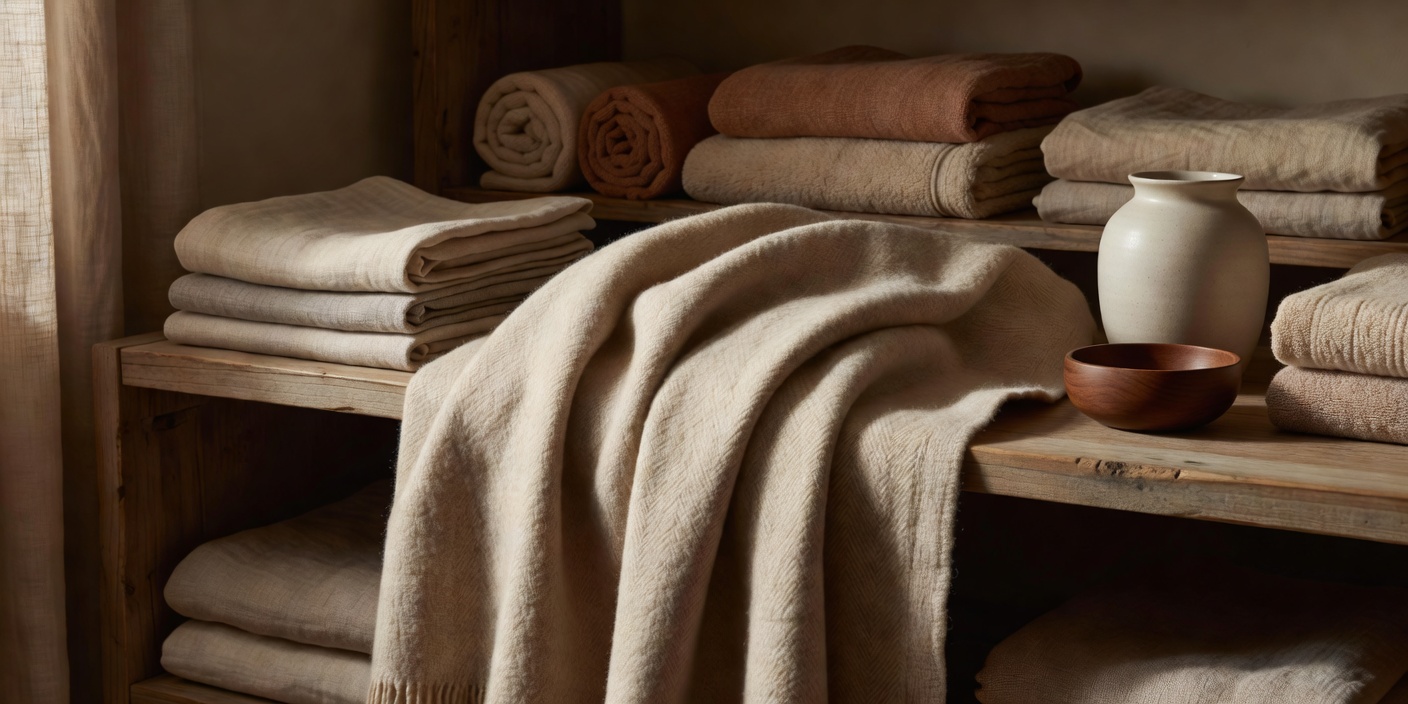
Buy for the room you have
Start by noticing the room's existing conditions: its light, scale, colors and storage. A decorative object that looks dramatic in a spacious studio may overwhelm a narrow shelf. A dark textile can bring depth to a bright room but may show lint. A reflective finish can make a corner feel lively while also emphasizing fingerprints. Try to picture an object in its intended place at different times of day, not just in a styled product image.
Measure before ordering. Check the height and width of a lamp against the table, the reach of a throw across a chair, or the footprint of a tray on a crowded counter. Compare dimensions with an object you already own to create a more reliable sense of scale. If a piece needs special clearance, a particular bulb or assembly, confirm those details before purchase.
Choose materials for the household
Natural fibers, solid materials and hand-finished surfaces may offer appealing texture, but each has its own care profile. Linen can crease; wood can respond to moisture and sunlight; ceramic can chip if handled roughly; glass needs stable placement and gentle cleaning. These are characteristics to plan around, not automatic drawbacks. The right choice depends on who uses the room, how busy it is and how much maintenance feels reasonable.
Look for clear, specific descriptions. For textiles, seek fiber content, weave or construction notes, washing instructions and whether removable covers are available. For lighting, check the bulb type, electrical requirements, safety information and whether replacement parts can be sourced. For tableware, confirm intended use and care guidance. A product page that explains practical details makes it easier to compare alternatives responsibly.
Premium details that matter at home
Some details improve repeated use: a lamp switch that is easy to reach, a stable base, a washable cover, a smooth drawer pull or a vessel that is comfortable to hold. Other features are mostly visual. There is room for both, but it is useful to know which kind of value you are paying for. If a subtle finish will only be noticed when dusting, it may not be a priority. If it makes a daily task more pleasant, it may be worth considering.
Assess finish in relation to use. A matte surface can soften glare but may show oily marks. Polished metal can be striking but calls for wiping. A textured glaze can add visual character but may be less simple to clean in some settings. Ask for close-up photographs where a finish is important, and do not assume that handcrafted means indestructible or that a higher price guarantees better performance.
Make a comparison that includes upkeep
| Home item | Useful checks | Possible trade-off |
|---|---|---|
| Throw or cushion | Fiber content, removable cover, wash method, dimensions | Delicate texture may need gentler laundering. |
| Lighting | Bulb type, switch access, stability, replacement parts | Distinctive shapes can limit bulb options. |
| Vase or vessel | Weight, base stability, opening size, cleaning access | Fragile or narrow openings may require careful handling. |
| Small furniture | Measurements, joinery details, finish, assembly and returns | More substantial pieces can be harder to move or return. |
Decorate with restraint
A considered home edit does not require replacing everything. Introduce one useful change, live with it and notice whether it improves the room. Repeating a material or tone can create cohesion, but too many matching objects can feel overly arranged. Mix familiar pieces with one new texture or finish, and leave some surfaces open so an object has room to be appreciated.
For purchases with a meaningful cost, look beyond the product description. Review the seller's return terms, shipping and packaging details, warranty scope and any repair service. Check whether dimensions include handles or protruding parts. Save the care instructions somewhere accessible. The better the information before purchase, the less likely a handsome object becomes a frustrating one.
Affordable luxury at home is ultimately personal: it may be the lamp that makes reading comfortable, the linen you reach for at the end of the day, or the small ceramic piece that makes a routine feel less hurried. Choose details that serve the household and accept the realities of living with them.